
May 2026: Aviation & Aerospace
We’ll explore aeronautical engineering and aircraft design, aviation navigation and instruments with real pilot insights, and rocketry and spaceflight, learning how aircraft fly, how pilots navigate, and how rockets escape Earth’s gravity.
We'll also go behind the scenes and talk with active pilot in special interviews, participating in guided flight lessons, and engaging in hands-on, expert-led experiences that bring real aviation and aerospace careers to life.
FIELD TRIPS for this Month
- 787 Captain Pilot Interview 5/4 at 12pm Pacific (3pm Eastern) 30 min
- Thunderbird Pilot Interview 5/4 at 12pm Pacific (3pm Eastern) 30 min
- Flight Lesson with a CFI 5/6 at 12pm Pacific (3pm Eastern) 60 min
- Lt. Col. Patricia Northrup 5/13 11am Pacific (2pm Eastern)
- Double Pilot Interview: Military Fighter (Carrie) & Commercial Airline (Lisa)
- Mark with VelocityR, helping students get scholarships for flight training 5/15 at 9am Pacific (12pm Eastern) 60-90 min
Week 30: Aeronautical Engineering & Aircraft Design
If you are curious how airplanes fly without flapping like a bird, how to read aircraft instruments and tell which runway to land on, what it’s like inside a real cockpit on a 747, and how hypersonic aircraft can go so fast without melting the wings off, then this is the class for you! You’ll learn the major components of aircraft, how to control aircraft in flight, what kinds of weather you can and can’t fly through, how engineers design new aircraft engines, and so much more. Did you know there’s a pilot shortage? A LOT of pilots are nearing retirement age, and it has a lot of folks concerned that we won’t have enough pilots in the future to take people and packages where they need to go!
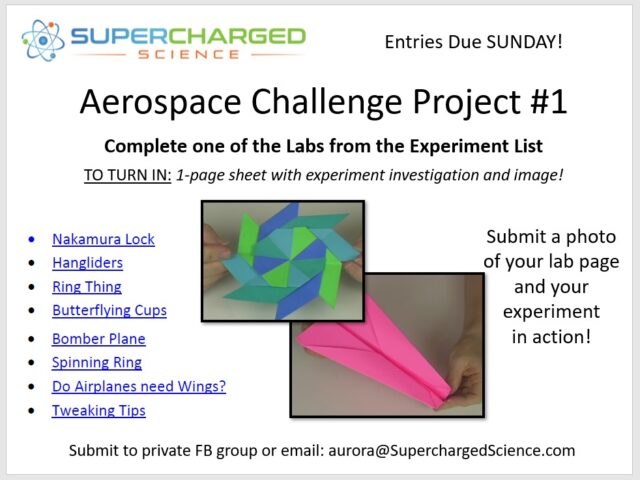
- Week 30 Aeronautical Engineering: Aircraft Design (Worksheet #30)
Special Interview with American Airlines Chief Pilot Captain Dave
We're going to have a special guest presentation with American Airline Pilot Dave, who was one of the youngest pilots American has ever hired. Dave is a jet pilot, commercial pilot, and has over 30 years of flying experience and is going to share his passion about flying with us!
Special Interview with Thunderbird Pilot Captain Steve
We're going to have a special guest presentation with Captain Steve from the Thunderbirds. The Thunderbirds are the U.S. Air Force’s elite aerial demonstration team, known for performing precision flying in fighter jets at airshows and public events worldwide.
Pilot Interviews & Flights with a CFI!
Join us in asking pilots questions and learning what it takes to become a real pilot, what types of jobs are available today, and how much fun it is to be a pilot for over 3 decades! You'll also get to jump onboard for an introductory flight with a certified flight instructor! This was streamed live, so enjoy the live element, including the camera bumps, technical glitches, and student questions.
Week 31: Aviation: Navigation, Instruments, Avionics
We'll take you from zero to soaring through the clouds with a certified flight instructor. Discover the different flight instruments that pilots use to fly the airplane and make sure they reach their destination. You'll also get to meet airline captains, military pilots, and more with this hands-on set of flying sessions designed to get you inspired to take flight!
- Week 31 Avionics & Instruments (Worksheet #31)
Live with VelocityR (2026)
Live with VelocityR (2025)
Week 32: Rocketry & Spaceflight
Soar, zoom, fly, twirl, and gyrate while you learn what it takes to move through the vacuum of space! Learn about different propulsion drive systems and how rockets accelerate to escape the gravitational pull.
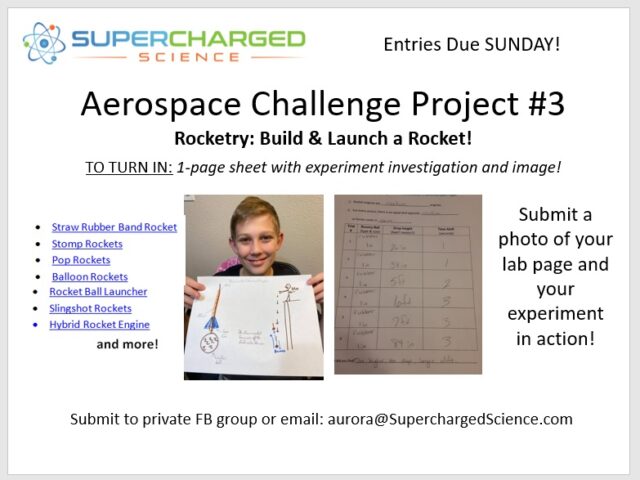
- Week 32 Rocketry, Spacecraft Propulsion & Design (Worksheet #32)
Making Your Own Science Lab Worksheet
How do you create a science lesson worksheet that really captures what you're trying to do with your lessons? When I taught mechanical engineering at Cal Poly state university, one of the big things that students struggled with was creating their own data tables, because they had relied on other people / textbooks / teachers to always provide them with a "worksheet" to go with their "lab".
This means that they never developed the ability to generate their own work. What's worse, they didn't really understand how to think like a scientist. And that's something you can start doing now, no matter how old/young your kids are!
There's really nothing magical about a science worksheet or data tables. You don't need a "printable" or anything fancy. These data tables and worksheets are actually just an expression of what naturally comes out of your science experiment. And the whole point to doing an experiment is to answer a question.
So we start with a question, and we make sure it's something we can design an experiment around it, so it has to be answerable with something that is measurable. The rest is really very easy!
The ideas in the video here are taken from my college-level lab reports that we had students turn in at the end of a standard three-hour experiment. This format has been adjusted to hone in on the essential things you must have to make it a real science lab data sheet.
BONUS! Airplane Party Ideas
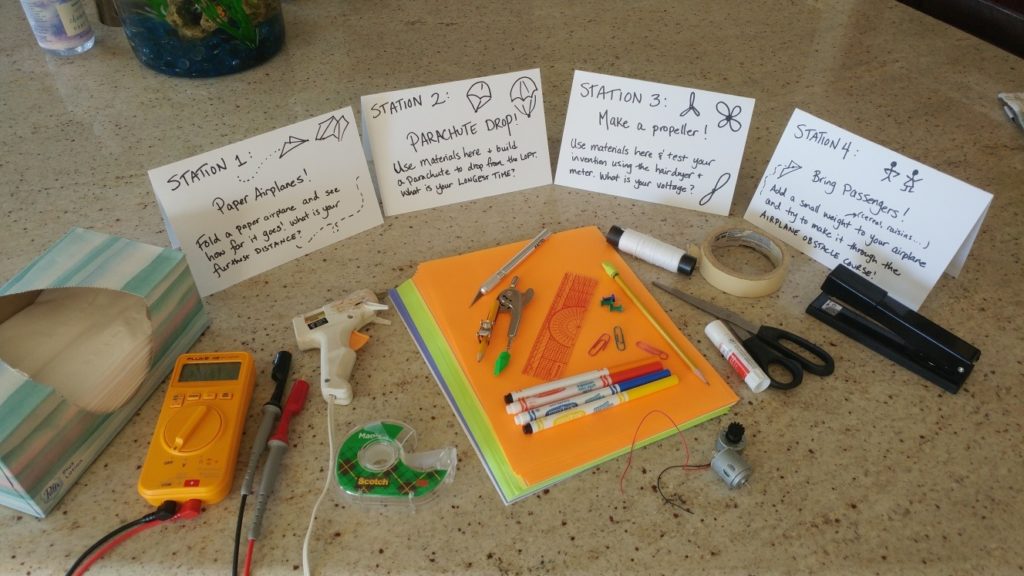
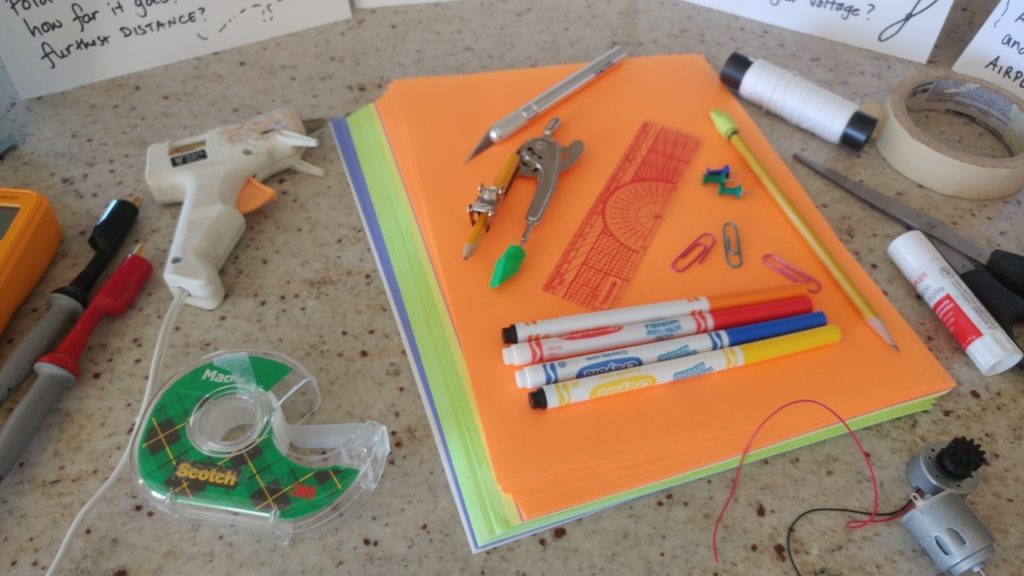
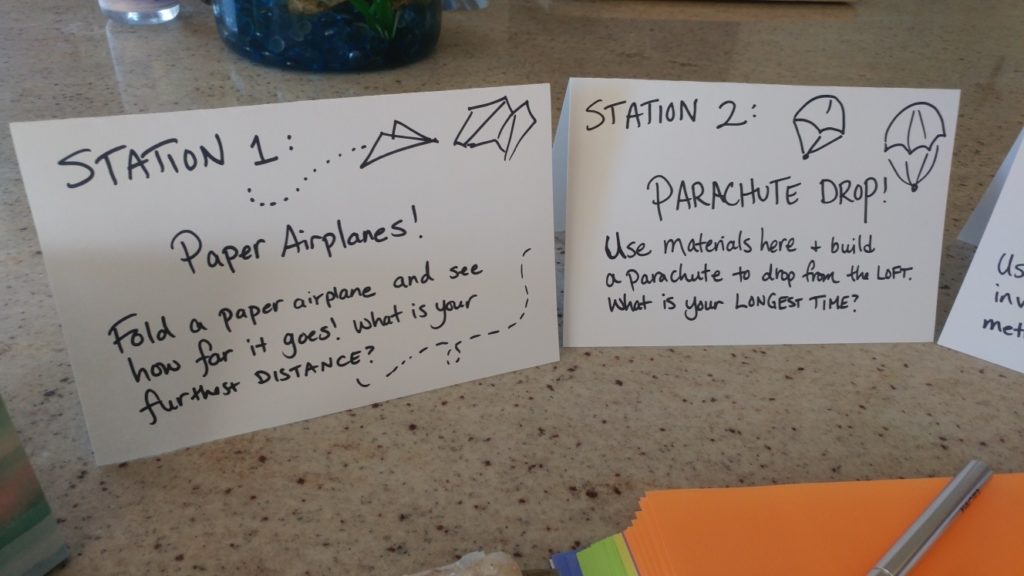
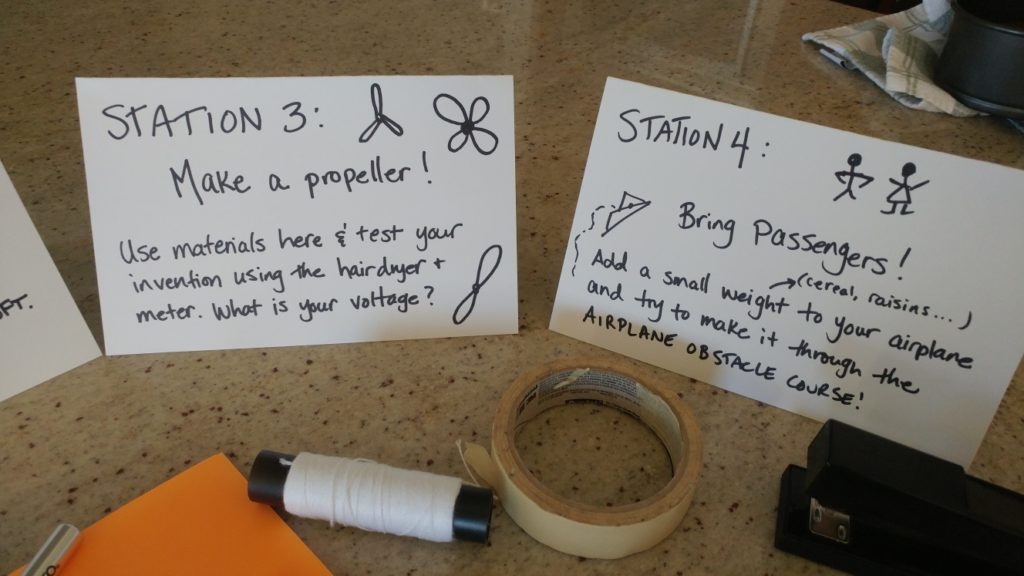
If you love the idea of building your own aircraft, then try this fun idea out! You'll find four separate challenges, Station 4 was an "airplane obstacle course" with hula hoops, jump ropes, laundry baskets... you get the idea. For most of it, we used simple materials like paper, pencils, markers, tape, scissors, hot glue, string, paperclips, tacks... things that are easy to find around the house.
For exact building directions for Station 3 (Make a Propeller), please refer to Week 34: Airplane Design recording Part 2 (above) near the end. You will need a small hobby motor, wires, and a digital meter. Be sure your digital multimeter is on the right range for voltage (or you will only see "0.00" on your meter). You will probably generate less than 1 volt using this testing technique, so set it to the milliamp setting to get numbers to show up when you spin the motor shaft.
[/am4show]