
[am4show have='p8;p9;p11;p38;p72;p77;p92;' guest_error='Guest error message' user_error='User error message' ]
Week 27: Geology of Rocks, Minerals and Crystals
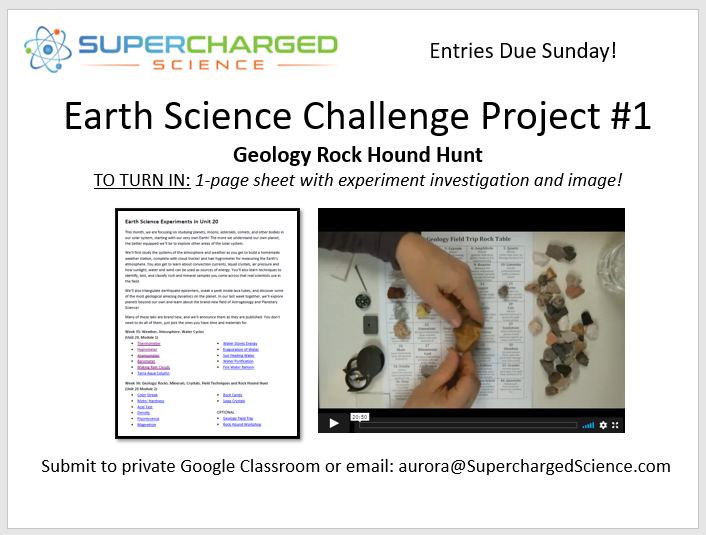
We’re about to dive into the big ideas behind rocks, minerals, and the science of geology. Soon you’ll learn how to burn coal, fluoresce minerals, chemically react rocks, streak powders, scratch glass, and play with atomic bonds as they learn how to be a real field geologist. Throughout this week, we’re going to be talking about the chemical composition (what elements rocks are made of), so you’ll really understand chemistry and geology both! This week covers Unit 20 Module 2.
- Week 27 Geology: Rocks, Minerals, Crystals (Worksheet #27)
Week 28: Volcanoes, Earthquakes and Tides
Discover the shifting movement of the earth as it moves energy around the interior of our planet! You'll learn how to build electronic detectors to measure temperature, shift, sunlight and more. You'll also explore volcanoes (both above and under water), discover vertical shifting in water and land tides, and learn how to triangulate the epicenter of an earthquake! This week covers select topics in Unit 20.
- Week 28 Volcanoes, Earthquakes, Tides (Worksheet #28)
Earthquake Lab
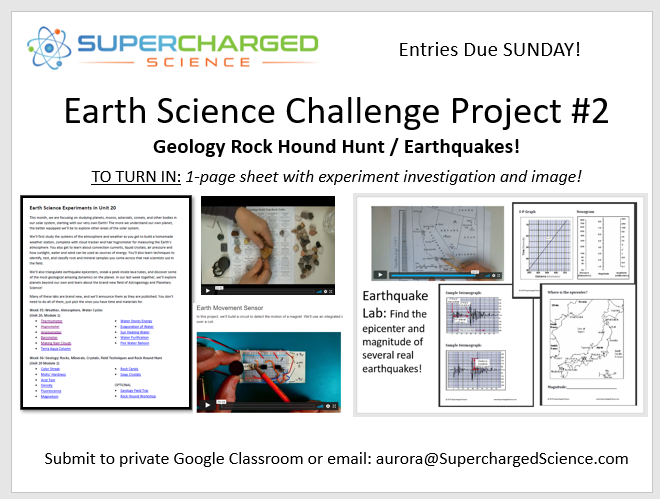
Use real scientific data to calculate the epicenter of four different earthquakes!
After you watch the video, click the link to do your seismology calculations to figure out both the epicenter and the magnitude of four different earthquakes:
- Japan Earthquake 1995 (map answer)
- Los Prieta California Earthquake 1989 (map answer)
- Mexico Earthquake 1978 (map answer)
- Northridge California Earthquake 1994 (map answer)


If you'd like to measure the Earth's Magnetic Pulse, you can do that here.
Volcano Lab
Join our team of scientists and study a recent volcanic eruption in Iceland!
Print out the lab either format: Lab with images or printer-friendly (no pictures).
Week 29: Weather, Atmospheres & Water Cycles
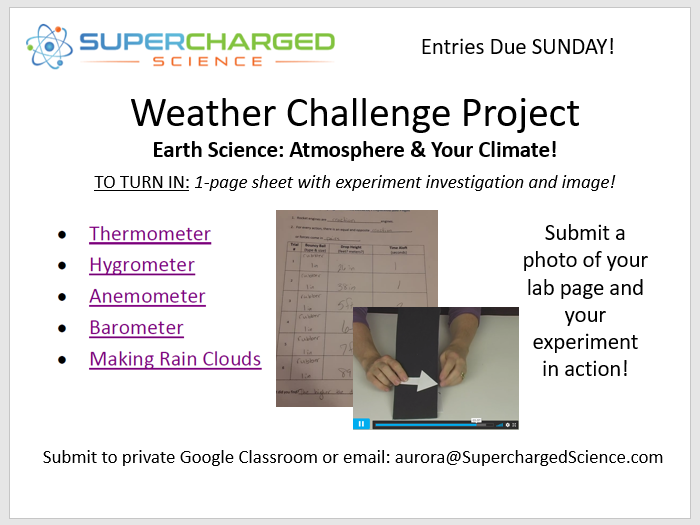
Weather changes so quickly around our planet that pilots can even get a minute-by-minute weather update! We're going to discover how temperature, pressure, humidity, and wind strength all contribute to the weather we experience. Weather is how the Earth moves energy around our planet, and by studying storms, hurricanes, tornadoes and extreme heat conditions can help us better understand changing climate conditions, solar winds and ozone levels. This week covers Unit 20 Module 1.
- Week 29 Weather, Atmosphere, Water Cycles (Worksheet #29)
Explore Earth Science with Electronic Devices
Build your own electronic instruments for exploring deeper into Earth Science studies!
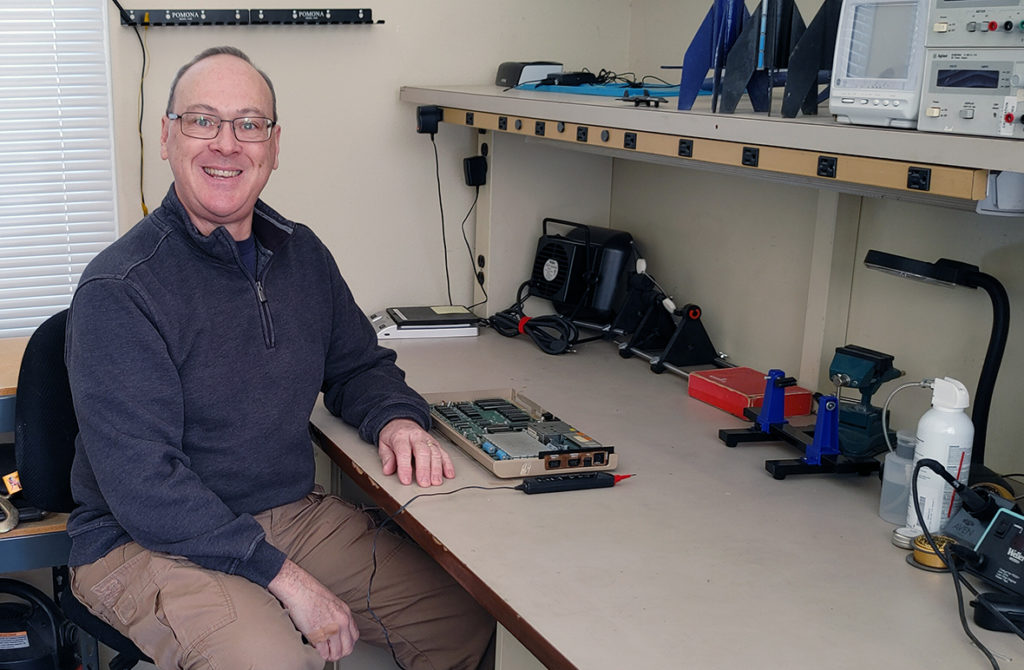
Discover how electronics can help us explore the Earth in exciting new ways! In this hands-on project series with Brian, students will build real working devices that measure light, wind, temperature, and motion using sensors, circuits, and everyday scientific tools. Along the way, they’ll learn how electronics are used to study weather, sunlight, and environmental changes while gaining valuable engineering skills through fun, step-by-step projects.
If you’re already in Brian’s electronics class, this is a great place to explore Earth science topics more deeply through the power of electronics. The happy news is that if you have Brian’s Electronics Essentials Kit, you already have all the electronic parts needed to complete these projects. Click the button below to get started!
[/am4show]